The Right Learning Approach to Prepare Children for the 11+ Exam
Getting ready for an entrance assessment may be a big task for children and their parents. Children may be asked to apply their knowledge, understanding, and abilities, not just remember facts. This is the reason why the 11+ examination can be linked to grammar school entries. Each child is a unique learner, and preparation should be based on pupil understanding, confidence, and progressive learning.
Families starting to explore their options will find an 11 plus tutor to be a valuable academic support. And children will be able to get to know the kinds of skills and questions they might encounter in their preparations. But successful preparation isn’t just about doing practice papers. There are ways to help children learn the routine and confidence to tackle difficult questions without fretting.
Knowledge of What the 11+ is Testing For
The 11+ does not always have to be the same in all areas and schools. Assessment methods and types may differ, and families should learn what is required in the schools they are interested in.
Various Skills May Be Required
Children can be faced with sections of maths, English, verbal reasoning, non-verbal or spatial reasoning, based on the assessment. Other approaches may be needed in these areas. Once they know what the skills are, they can plan to prepare for them.
Experience Can Lessen The Uncertainty
If an entrance assessment is presented in a new format, a child who has not previously seen this format might waste time. They may be trying to understand what a question is asking for. Unfamiliar formats become more familiar with practice.
There must be a reason for practising, other than recalling solutions. Rather, children will learn to structure their questions, to determine important information, and how to approach unfamiliar problems systematically.
Building Strong Foundations
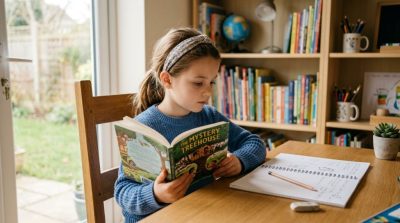 It can be through:
1-Focusing on Comprehension Skills
Was the question not understood by the child? Was there a mistake in the calculation? Is there an important detail missing? Knowing the cause of an error enables the child to progress on the targeted skill.
2-Improving Core English Skills
Effective reading and language abilities can contribute to a number of aspects of academic readiness.
Introducing Reasoning Skills
The questions on reasoning may be unfamiliar to students in comparison to regular classroom activities.
1-Look for Patterns
There are many reasoning activities that include identifying relationships or patterns. These skills can be acquired by children through puzzles, sequences, classification activities, and other activities that are suitable for children. The intent is to make them think outside the box and how information can be connected to other information.
2-Encourage Logical Thinking
Logical reasoning can be applied outside of entrance tests. Children can start to learn to think about how they can answer a question.
Developing an Effective Study Routine
Here’s how:
Keep Sessions Manageable
Sitting and studying for lengthy periods may be exhausting, particularly for younger students. Brief, intense sessions might be less difficult to stick to. The child may have one session of maths and another of reasoning and another of reading comprehension in the course of their sessions. The timescale may be modified as per the requirements and commitments of the child.
YOU MAY ALSO READ: How To Better Improve Study Habits
Under Time Limits: Practicing with a Time Constraint
Some children know what they are studying, but don’t cope well with questions being asked within a time limit.
Introduce Timing Gradually
After they are more at ease, timed exercises can be gradually introduced. This will enable them to build their speed without compromising on their understanding.
Learn When to Move On
One problem can bog down a child and cause him to spend too much time on it. Practice sessions can help children learn when to proceed to the next challenging question. They can come back to it later in the setting when it is appropriate. Time management skills are as crucial as the content of the material.
Creating a Feeling of “Confidence” without the Pressure
Academic preparation should provide challenges to children, but not undue stress.
1-Set Realistic Goals
Rather than setting a goal solely for the end, families can set smaller goals. For instance, a child may be trying to get better at solving a kind of math problem or become more accurate at comprehending reading material. A little good here and there can make a lot of difference in making progress visible.
2-Praise Effort and Strategy
Children are encouraged to persevere, show good problem-solving, and progress, benefiting from this. If you state that the child solved a challenging problem carefully and more effectively, you will be reinforcing productive habits. This is comparable to if you simply said whether or not the child was correct at the end.
The Emphasis on Individualized Support
Check on these:
1-Discover Specific Challenging Areas
One child may be comfortable with mathematics but struggle with vocabulary. Another may have a difficult time with questions that require reasoning. Being able to identify the difference allows for more efficient preparation. Time can be allocated to subjects in proportion rather than equal amounts, so extra needs to be directed to subjects requiring the most.
2-Understand Children’s Learning Style
Explanation, diagrams, examples, repetition, and hands-on can be used to help some children; others learn best through explanations. These differences should be taken into consideration in providing effective support. It is not intended that all children should have the same preparation procedure but to develop ways to help each child comprehend and remember.
Making Preparation A Positive Experience
Test preparation is not all part of the months prior to an entrance assessment. Children may be more willing to try something difficult if the environment is positive for learning and to learn from their mistakes.
Conclusion
Preparing for the 11+ is not just about doing as many practice questions as you can! Students will be able to develop academic skills and foundations, improve reasoning skills, be able to time manage, and learn different types of questions. A structured routine may give direction, but flexibility is important as well.
Individual strengths and weaknesses are identified, and then preparation is done for that part where it will make the most impact. Most, if not all, importantly, children should be shown how to use challenging questions as a tool for thinking and learning and not for discouragement. Preparation can be a manageable part of a child’s educational life with consistent practice, appropriate support and a balanced routine.
