Understanding Structural Risks Behind Windshield Cracks and Why Early Assessment Matters
The National Highway Traffic Safety Administration (NHTSA) identifies vehicle glass as an important part of occupant protection systems because it contributes to structural support during collisions and rollover events. That fact often surprises drivers because windshield damage is usually first noticed as a small line, chip, or star-shaped mark that appears harmless.
Two views commonly exist around windshield damage. One side sees small cracks as cosmetic flaws, similar to scratches on paint or tiny dents on a car door. The other perspective treats those same marks as possible safety concerns that deserve attention. Information from windshield damage replacement discussions and vehicle glass safety resources suggests that understanding the context of damage matters because seemingly minor defects can sometimes develop into larger structural concerns.
Both perspectives have some truth behind them. A tiny chip may remain stable for months and never create a major issue. Yet there are situations where a small fracture changes shape quickly and begins affecting visibility or overall windshield strength. The challenge is knowing when appearance no longer tells the whole story.
How Laminated Glass Changes the Conversation
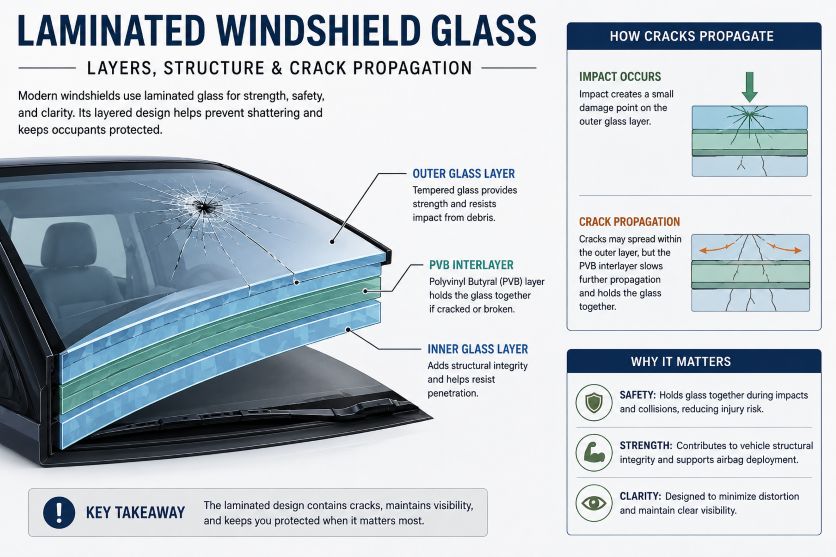
Modern windshields differ from ordinary glass. Rather than a single sheet, they are commonly made from laminated layers. Two pieces of glass are joined with a plastic interlayer that helps keep fragments together during impact.
This design serves several purposes. It supports visibility after damage, reduces the chance of glass scattering during accidents, and contributes to vehicle structure. Because the windshield interacts with the roof and airbag systems, its condition extends beyond simple appearance concerns.
The Auto Glass Safety Council notes that properly installed and maintained automotive glass plays a role in preserving structural integrity. A windshield therefore acts as more than a transparent barrier against wind and rain.
Stress distribution becomes important here. Forces applied to a windshield do not stay isolated to one tiny location. Energy moves outward across the glass surface. A chip from road debris may seem small on day one, but the surrounding material can continue carrying internal stress.
Think of tension spreading through fabric. A small tear may stay fixed for a while, yet pressure applied repeatedly around the damaged area can gradually increase its size. Glass behaves differently than fabric, but the principle of stress movement helps explain why crack growth sometimes appears sudden.
Environmental Conditions That Influence Crack Growth
Many people assume a windshield crack spreads only because of another direct impact. Reality tends to be more complicated. Environmental conditions often act as silent contributors.
Temperature changes
Glass expands and contracts as temperatures change. A windshield exposed to strong sunlight may heat unevenly across different sections. During colder weather, warm air directed toward the windshield from a vehicle heater can also create temperature variation.
Research from the American Society for Testing and Materials has shown that materials respond differently under thermal stress conditions. Those temperature differences may increase strain around existing weak points.
A tiny fracture near the edge of the glass can become larger after repeated heating and cooling cycles. Drivers may notice a crack that seemed unchanged during the evening suddenly extending across a larger area the following morning.
Road vibration and vehicle movement
Daily driving creates constant movement. Speed bumps, rough pavement, potholes, and vehicle vibration place repeated pressure on the glass structure. This is why good driving behavior, such as avoiding sudden impacts when possible and slowing down on uneven roads, can help reduce unnecessary stress on an already weakened windshield.
Each event may appear insignificant alone. Over time, however, repeated stress cycles can affect already damaged sections. Similar to bending a paper clip multiple times, repeated pressure eventually changes material behavior.
Secondary impacts
Damage rarely exists in isolation. Gravel, debris, or additional minor impacts may strike nearby areas after the original chip appears.
Even small contact events can change the way stress distributes across the surface. Existing weaknesses sometimes create paths where crack lines continue spreading.
When Repair Makes Sense and When Larger Intervention Becomes Necessary
The question many drivers ask is simple: can the windshield be repaired, or does it need a complete solution?
There is no universal answer because damage conditions vary.
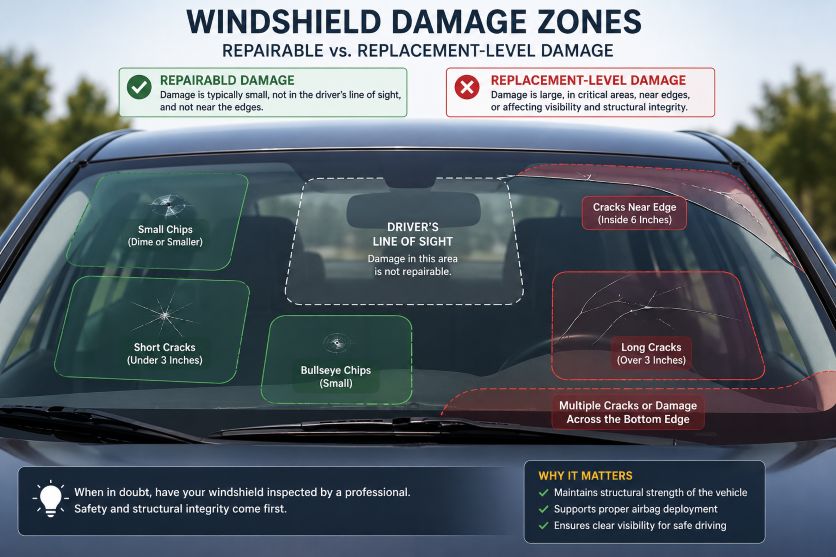
Repair often remains possible when damage is relatively small, away from the driver’s direct line of sight, and limited to specific sections of the glass. Early action can help prevent additional spreading and preserve existing material.
However, certain situations change the evaluation.
- Cracks that continue expanding across larger areas
- Damage near windshield edges
- Multiple impact points
- Distortion affecting visibility
- Damage interfering with driver assistance systems
Experts note that edge cracks can deserve closer attention because stress concentration often increases around border areas. Modern vehicles may also contain sensors and cameras mounted near the windshield, creating additional considerations.
Vehicle glass repair specialists generally assess size, location, shape, and growth patterns before recommending intervention. The decision process usually weighs structural function alongside visibility concerns.
Finding Balance Between Alarm and Neglect
Windshield cracks often create two unhelpful reactions. Some drivers dismiss every defect as harmless. Others assume every mark immediately requires complete glass replacement.
Neither approach captures the full picture.
Small defects sometimes remain stable with minimal consequences. Other situations justify stronger action because structural support and visibility become factors. Glass repair decisions work best when based on inspection rather than assumptions.
Balanced judgment remains important. Early evaluation does not automatically mean extensive work is required. It simply creates an opportunity to determine whether minor repair, glass restoration, or a larger corrective measure fits the situation. Understanding how stress, environment, and damage patterns interact allows drivers to make decisions based on evidence instead of appearance alone.
Because windshield conditions can change over time, early assessment often provides something valuable beyond cost considerations, which is clearer information for making safer choices.
